Your specialty sets your patient’s age. Their age decides whether you reach them or their family.
Four specialties, the platform data behind each, and the actual posts. Fifteen of them, laid out so you can see what changes and why.
YouTube is India’s largest platform. Healthcare marketing ignores it.
Five hundred million people, ahead of Instagram and well ahead of Facebook. X, which still appears in agency proposals, is 4.4% of YouTube’s size.
In India, Facebook is not the older platform.
The standard advice is Facebook for older patients, Instagram for younger. In India both are dominated by under-35s and the gap between them is small.
DataReportal puts Facebook’s India reach at 403 million. NapoleonCat puts it at 684.9 million. Both say they take it from Meta’s advertising tools.
Against 112.2 million Indians aged 65 or over, the first gives Facebook a reach of 7.9% among over-65s and the second 13.4%. We publish the range rather than pick the flattering end. Either way the conclusion holds: if your patient is 68, there is roughly a one-in-ten chance of reaching her on Facebook. If she is 24, you almost certainly will.
What the disagreement tells you: platform reach figures are estimates of addressable audience, not counts of people. Treat the shape as reliable and the absolute numbers as soft.
Same practice. Four audiences. Four different creative problems.
Every search figure is from Ahrefs, India, pulled 21–22 October 2026. Every post respects the Schedule to the Drugs and Magic Remedies Act 1954 and Regulation 6.1 of the IMC Regulations 2002.
She is 24, and she has read more than you expect.
Patient age: 18–34. Who is on the platform: her. Lead: Instagram, then YouTube.
She has been told to lose weight, probably more than once, and has read forty articles. Creative that explains PCOD from scratch insults her. Creative that corrects something she was told earns the appointment.
Indian patients type PCOD. Global medical publishers write PCOS. More than twice the volume at a difficulty of 1 against 88. Your competitors are optimising for the spelling your patients do not use.
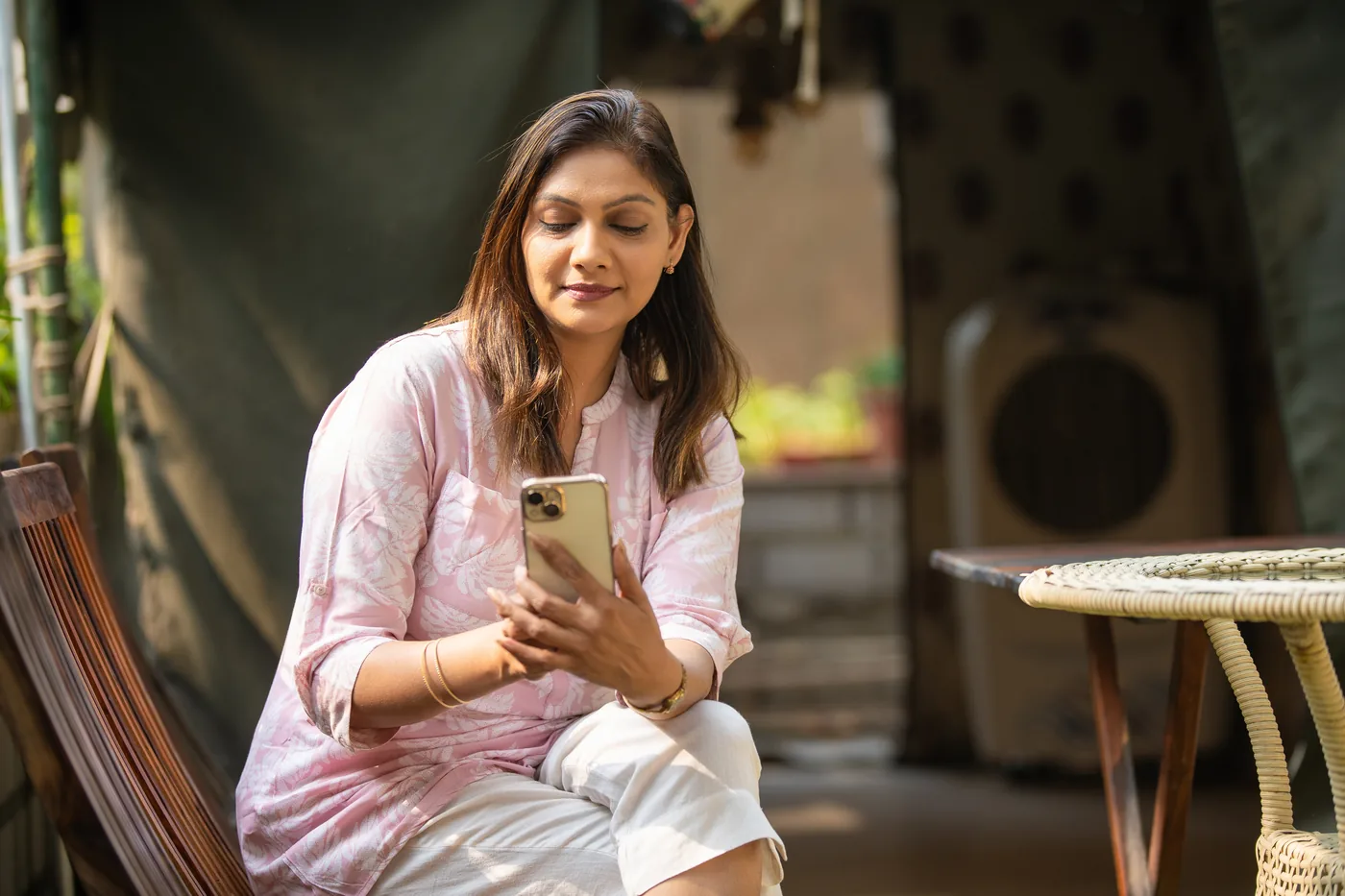
You were told to lose weight.
Why it works: it opens on the sentence she has already heard, from someone who is about to disagree with it. The image is her, not a doctor — the account is talking to her, not about her.
That was advice.
Not a diagnosis.
PCOD is hormonal. Weight can be part of it. For a great many women it is not part of it at all.
Why it works: the correction lands on slide two, in eight words. Compliant: states what the condition is, promises nothing.
Why it works: ends on the fee. Almost no Indian gynaecology practice publishes one, and it is the question she will not ask on the phone.
“My scan was normal. So why do I still have PCOD?”
Because the diagnosis is not made on the scan alone. Three findings are weighed together, and you can meet the criteria with a normal ultrasound.
Why it works: her question, in her words, answered with something she has not read. Stories are where a practice is useful without being promotional.
Four things checked before anyone says PCOD.
Dr [name] walks through the actual criteria. Under a minute.
Why it works: “before anyone says” promises the reasoning, not reassurance. Compliant: explains criteria, recommends no treatment.
PCOD or PCOS?
The spelling matters.
Dr [name] · MD Obs & Gynae
Why it works: it answers the terminology split the search data exposes — 220,000 searches for one spelling, 97,000 for the other.
He is 52 and organising his own care.
Patient age: 40–60. Who is on the platform: usually the patient, often a spouse too. Lead: Facebook, then YouTube.
He is not frightened — he is irritated at being sent for a test. He wants the time, the cost, and whether he can go to work afterwards. Creative that dramatises heart disease loses him.
34,000 searches a month at difficulty zero, and we have not found an Indian hospital page that properly answers what it is, what to wear, and what it costs.

Nine minutes on a treadmill.
That is the whole test. What to wear, whether to eat, what the report says, and what it costs.
Why it works: the specific number removes the fear. Specificity reads as competence; reassurance reads as sales.
₹1,800
to ₹3,200 here. What moves it: whether an echo is done the same day, and whether your insurer requires a cardiologist review.
Why it works: the number is the creative. Compliant: a price is a fact, not an outcome claim or an inducement.
Wear shoes you can walk fast in.
Not sandals. Not new ones. Half the TMTs we reschedule are footwear.
Why it works: it solves a real operational problem and reads as a practice that has noticed its own patients.
The patient is three weeks old. You are writing to her mother.
Patient age: infant. Who is on the platform: the mother, 25–40 — squarely inside the largest group on both platforms. Lead: Instagram, Facebook, WhatsApp.
She is exhausted and deciding, several times a week, whether something is serious. The most valuable thing a paediatric practice can publish is when to call. The most dangerous is a clinical threshold she might act on alone.
The informational terms are genuinely hard — difficulty 44 to 48, held by global publishers. Do not fight them. The winnable work is practice-specific: what your visit involves, what it costs, when to ring.

You will never be told you are overreacting.
Why it works: it names the fear that actually stops a parent ringing. Nothing clinical is promised — only how the practice behaves.
Why it works: entirely practice-specific. Compliant: no symptom list, no threshold, nothing a tired parent could misapply at 2am.
Under three months, we always take the call.
Day or night, without an appointment first. You do not have to decide whether it is serious enough. That is our job.
Why it works: it removes the decision she is least equipped to make. It also commits the practice to something it must actually honour — which is the point.
She is 68. Her daughter is reading this.
Patient age: 55+. Who is on the platform: the adult child, 28–45. Lead: Facebook, then WhatsApp.
This is the case where the caregiver rule genuinely applies. She is comparing three hospitals on a phone, at night, after work. The number comes first. Everything else can wait.
No map — content decides it. At position seven, a hospital with an authority score of 9 and zero backlinks takes 249 visits a month. At position eight a medical tourism aggregator takes 1,085 — patients who could have reached a hospital directly.

She is 68. You are the one reading this.
The figure, what moves it, how long she will be in, and what the first fortnight at home needs.
Why it works: it addresses the person actually on the platform. The image is the two of them, which is the real unit making this decision.
₹1.6–2.9L
Implant type, one knee or both, room category, length of stay. We quote the exact figure before admission, in writing.
Why it works: a range with its four variables, and a written commitment. Compliant: no outcome claim, no urgency, no testimonial.
What we send back after we see your patient
Operative note in 24 hours. Physiotherapy protocol attached. A telephone call, not a letter, if anything was unexpected.
Why it works: addressed to the referring doctor, which almost no Indian hospital does. It makes a referral easier to place and harder to regret.
Find your specialty. Read across.
| Specialty | Patient age | Who is actually on the platform | Lead platform | What the creative must do |
|---|---|---|---|---|
| Gynaecology, dermatology, mental health, sports injury | 18–34 | The patient herself | Instagram, YouTube | Correct what she has already been told |
| Paediatrics | Infant / child | The mother, 25–40 | Instagram, Facebook, WhatsApp | Remove the decision about when to call |
| Cardiology, diabetes, bariatric | 40–60 | Often the patient, and a spouse | Facebook, YouTube | Logistics and cost, for someone organising their own care |
| Orthopaedics, oncology, ophthalmology, urology | 55+ | The adult child, 28–45 | Facebook, WhatsApp | Price first. They are comparing, and tired |
| Any specialty, referral stream | — | The referring doctor | Case criteria and what you send back |
Claim a cure for a scheduled condition. The 1954 Act names 54, including cancer, diabetes, heart disease, obesity, sterility in women, disorders of menstrual flow and female diseases in general. Section 7: up to six months’ imprisonment on a first conviction.
Publish a testimonial or a before-and-after. Soliciting under Regulation 6.1. The registration at risk is the doctor’s, not the agency’s.
Manufacture urgency. Named in India’s advertising code, and it makes a frightened family trust you less.
Give a clinical threshold a reader could act on alone. Not a regulation — our judgement. On a paediatric or cardiac account it is the line we will not cross.
- Platform reach in India: DataReportal, Digital 2026: India — YouTube 500M (Google advertising resources), Instagram 481M and Facebook 403M (Meta advertising tools), LinkedIn 170M registered members, X 22.2M. All late-2025 snapshots. Report
- Platform age distribution: NapoleonCat, from the platforms’ marketing APIs, September 2026. Facebook India · Instagram India
- India population by age: UN World Population Prospects 2024 revision — 1,476.6M total, 7.6% aged 65+. Source
- All search volumes and difficulty scores: Ahrefs Keywords Explorer, India locale, 21–22 October 2026. Each term queried individually.
- Knee replacement results page: Ahrefs SERP Overview, India, 21 October 2026.
- Drugs and Magic Remedies (Objectionable Advertisements) Act 1954, Sections 3 and 7 and the Schedule. Act text
- IMC Regulations 2002, Regulation 6.1; the 2023 NMC regulations were placed in abeyance. Source
No reliable WhatsApp figure. DataReportal’s India report does not publish one, and we are not going to quote an aggregator for it. Where this page recommends WhatsApp, that is our judgement from practice, not a measurement.
Also our judgement, not data: which creative formats perform best on each platform, the specialty-to-platform mapping in the matrix, and the claim that specificity outperforms reassurance.
Measured: platform reach, age distribution, population, every search figure, the results-page composition, and every regulatory provision.
Scope. Marketing and creative analysis by a non-clinician. No medical advice. The posts are illustrative constructions, not real campaigns; prices, names and registration numbers are placeholders shown as such, and the clinical detail exists to demonstrate structure rather than to guide any patient. Photography licensed from Adobe Stock and used here for demonstration. Decisions about tests and treatment belong with a registered medical practitioner. Not legal advice — for a compliance position on your own material, instruct a lawyer.
Work out who is holding the phone. Everything else follows.
Format, tone, what goes in the first line, whether you lead with the price. The audit tells you which of your specialties sits where, and which of your current posts we would not have published.